Telling Talkfront who your logged-in users are
Passing a signed-in customer to the widget so an agent is not asking who they are.
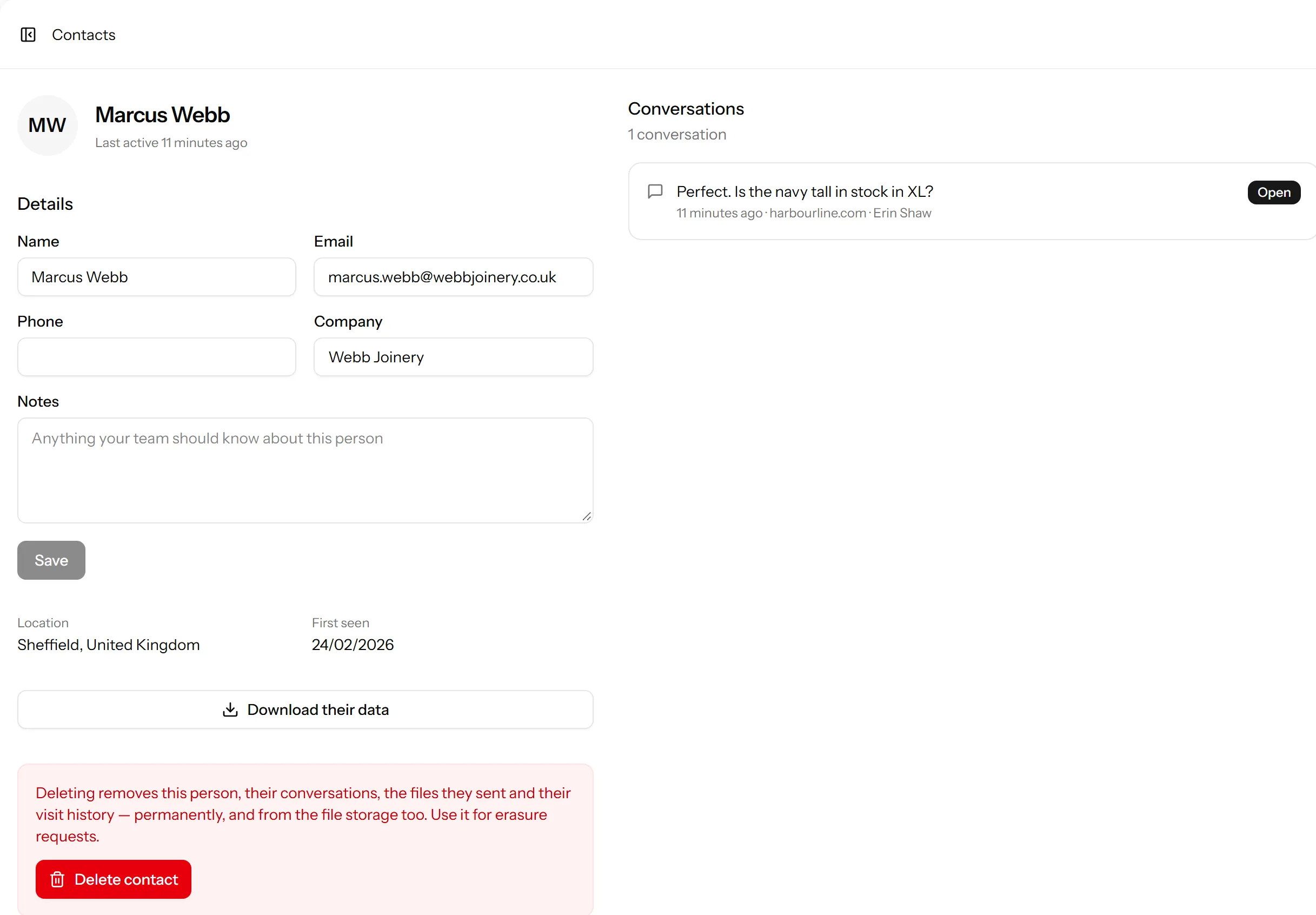
If somebody is already signed in to your app, your agents should not have to ask their name.
The call
<script>
  Talkfront('identify', {
    id: 'usr_1042',
    name: 'Marcus Webb',
    email: 'marcus@webbjoinery.co.uk',
  });
</script>
Call it once you know who the person is, after the loader tag. The snippet is
async, so Talkfront is not defined for the first moment of a page load.
Anywhere that runs after the page has settled is fine, and to call it earlier
add the queue stub.
id is your own identifier for that person. It is what ties this session to
the same contact next week, so use whatever your database calls them rather
than something that changes.
What your agents then see
Their name, email and anything else you passed, beside the conversation, without asking. Returning visitors are matched to the same contact, so an agent can see what they asked about last time.
Do it on every page
Identity is per page load, not a login that persists. If your app is server-rendered, put the call in the layout that every signed-in page uses. In a single-page app, call it once after your own auth resolves.
Do not pass what you do not need
Everything you send is stored against that person and is something you will later have to be able to explain and delete. Name and email earn their place. An internal risk score does not.
Next
- Verifying identity with a signed HMAC, which is what stops somebody claiming to be a customer.
- Passing custom data about a visitor, for plan, company and anything else your agents need.
- Identify, set and reset, for which call to make when.
Last updated 22 September 2026.